Call Us Today
+256 434 132 858
Skilling for Income-Generating Enterprises
Skilling for Income-Generating Enterprises
Changing Minds. Building Skills. Creating Opportunities. Promoting Self-Reliance.
Since 2024, Hunger Fighters Uganda (HFU), in partnership with the United Nations World Food Programme (WFP), has been implementing Skilling for Income-Generating Enterprises under the Self-Reliance Model (SRM) Project in Nakivale and Oruchinga Refugee Settlements.
The interventions equip refugees and members of host communities with practical vocational skills that enable them to establish sustainable livelihoods, increase household incomes, and reduce dependency on humanitarian assistance. By providing market-relevant technical skills, the programme empowers participants to become economically self-reliant while contributing to the development of local economies.
Training Areas
The programme provides competency-based, hands-on training in:
- Bakery and Baking Technology – Producing quality bread, cakes, pastries, and other baked products for household consumption and commercial sale.
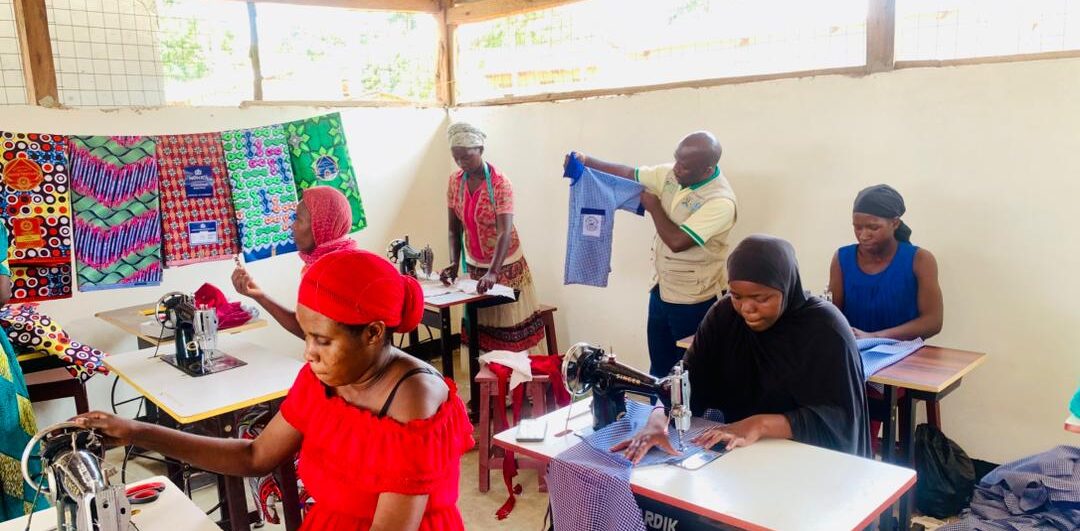
- Tailoring and Garment Making – Developing skills in garment design, cutting, sewing, repair, and entrepreneurship within the textile sector.
- Soap Making – Training participants to manufacture liquid and bar soap, promoting hygiene while creating viable business opportunities.
- Welding and Metal Fabrication – Equipping trainees with technical skills to produce metal products, undertake repairs, and provide fabrication services for local markets.
- Saloon and Hairdressing – beneficiaries are equipped with skills in hairdressing, and cosmetology and entreprenuership in the filed.
The Numbers
- Targeted communities: Refugees and Host Communities
- Households:
- Number of Beneficiaries:
A Holistic Approach to Self-Reliance
Beyond technical skills training, the programme adopts a holistic approach that prepares participants to succeed both economically and socially. Beneficiaries also receive training and awareness sessions on:
- Mindset Change – Fostering positive attitudes towards entrepreneurship, innovation, financial discipline, personal responsibility, and resilience to enable participants to embrace opportunities for sustainable livelihoods.
- Gender Equality and Social Inclusion – Promoting equitable participation of women and men in economic activities, shared decision-making, and equal access to opportunities and resources.
- Protection Mainstreaming – Raising awareness on protection principles, prevention of gender-based violence, safeguarding vulnerable groups, disability inclusion, child protection, and the creation of safe and respectful learning and working environments.
This integrated approach ensures that participants are not only equipped with vocational skills but are also empowered with the confidence, knowledge, and values necessary to build resilient households and thriving enterprises.
Promoting Sustainable Livelihoods
The Skilling for Income-Generating Enterprises initiative contributes to the broader objectives of the Self-Reliance Model (SRM) by:
- Enhancing employability and entrepreneurship among refugees and host communities.
- Creating opportunities for self-employment and small business development.
- Diversifying household income sources.
- Promoting gender equality, social cohesion, and peaceful coexistence between refugees and host communities.
- Strengthening resilience through life skills, protection awareness, and positive behavioural change.
- Reducing long-term dependence on humanitarian assistance.
HFU’s Approach
HFU works closely with WFP, community leaders, local authorities, and technical trainers to deliver market-driven vocational training tailored to local economic opportunities. The programme combines practical skills development with entrepreneurship, business management, financial literacy, and life skills to enable graduates to establish, manage, and expand successful income-generating enterprises.
Special emphasis is placed on the participation of women, youth, persons with disabilities, and other vulnerable groups, ensuring that no one is left behind in the journey towards self-reliance.
Expected Impact
- Through vocational skills development, entrepreneurship support, mindset transformation, and protection-sensitive programming, the initiative is helping to develop a generation of skilled artisans and entrepreneurs capable of supporting their families, creating employment opportunities, and contributing to resilient local economies.
- As participants transition from beneficiaries to business owners, skilled service providers, and community role models, the programme advances the goal of inclusive economic growth, dignity, and sustainable self-reliance for both refugees and host communities.
By investing in skills, positive mindsets, gender equality, and protection, WFP and Hunger Fighters Uganda are transforming potential into productivity, livelihoods into resilience, and communities into resilient engines of sustainable development.